


BRENTWOOD, N.Y. — From modest origins in a picturesque French town, a movement was born that would span continents and centuries.
In the mid-17th century, six women in Le Puy-en-Velay, a town in southern France, saw how families lived in poverty and decided to devote their lives to assisting them — the humble beginnings of the Sisters of St. Joseph.
Today, 14,000 members working in several countries are celebrating the 375th anniversary of their formal recognition by the Catholic Church as a religious congregation in 1650.
The Sisters of St. Joseph Brentwood, formed in 1856, 20 years after the congregation arrived in the U.S., are celebrating with a gala dinner, “Ignite the Night,” at the Cradle of Aviation Museum in Garden City, New York, on Oct. 15.
Because of their close ties to the Diocese of Brooklyn, where they have established schools and hospitals, they will also celebrate by visiting parishes throughout the diocese to talk about their history. And on Oct. 19, the sisters will gather at the Cathedral Basilica of St. James in Downtown Brooklyn for a special Mass at 11:30 a.m., followed by a reception.
RELATED: Sisters of St. Joseph Offer Affordable Housing to Students
Sister Tesa Fitzgerald, CSJ, president of the Sisters of St. Joseph of Brentwood, said the anniversary is giving her an opportunity to reflect.
“When the 375, this anniversary, arrived at our doorstep, I thought ‘Oh, wow!’ But it gave me pause to really look back and to get a sense of greatness and the magnitude of the incredible women who went before us,” said Sister Tesa, who professed her vows in 1964.
The congregation has weathered many storms over the centuries and has persevered to continue its work of serving God and those in need.
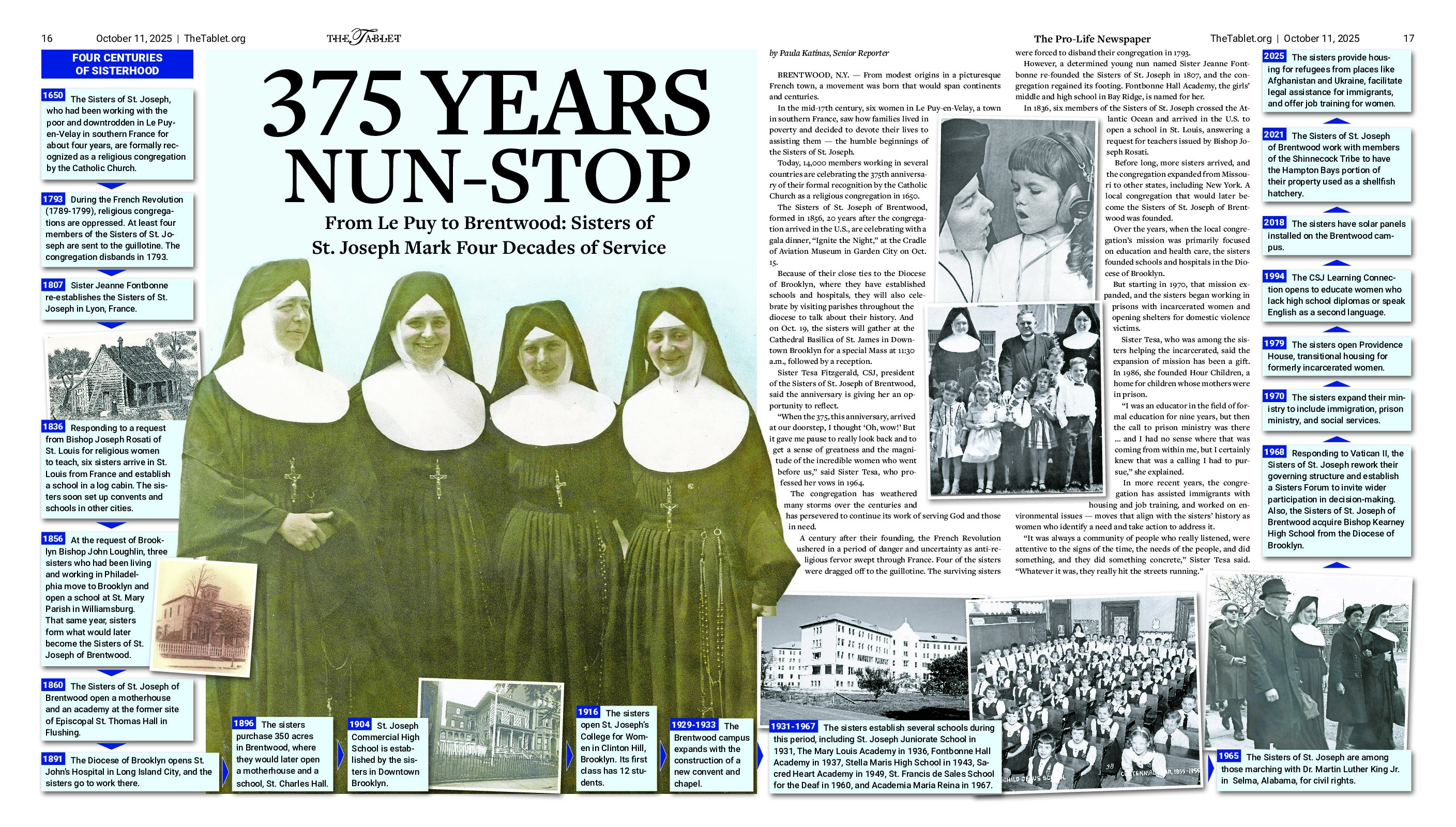
Click the image below to view the full centerfold from the Oct. 11, 2025 edition of The Tablet.
A century after their founding, the French Revolution ushered in a period of danger and uncertainty as anti-religious fervor swept through France. Four of the sisters were dragged off to the guillotine. The surviving sisters were forced to disband their congregation in 1793.
However, a determined young nun named Sister Jeanne Fontbonne re-founded the Sisters of St. Joseph in 1807, and the congregation regained its footing. Fontbonne Hall Academy, the girls’ middle and high school in Bay Ridge, is named for her.
RELATED: Fontbonne Hall Welcomes Middle School Program in ‘Coming Together’ Moment
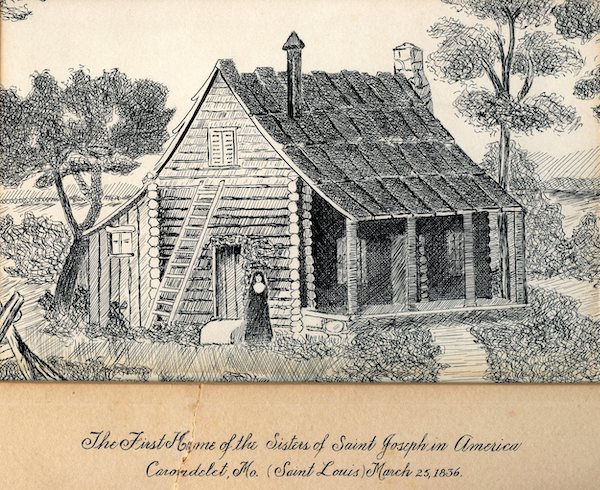
In 1836, six members of the Sisters of St. Joseph crossed the Atlantic Ocean and arrived in the U.S. to open a school in St. Louis, answering a request for teachers issued by its Bishop Joseph Rosati.
Before long, more sisters arrived, and the congregation expanded from Missouri to other states, including New York. A local congregation that would later become the Sisters of St. Joseph of Brentwood was founded.
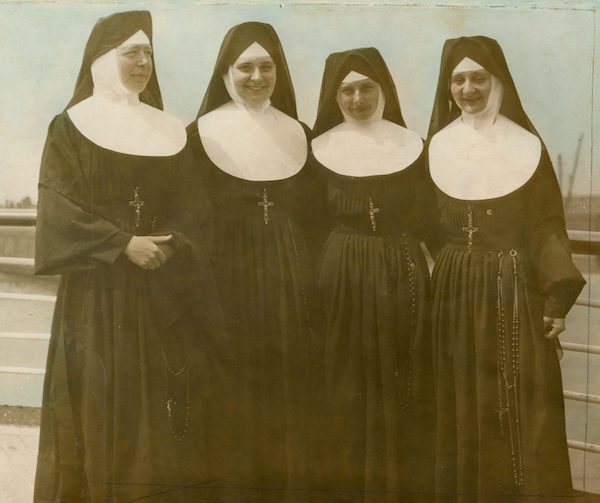
Over the years, when the local congregation’s mission was primarily focused on education and healthcare, the sisters founded schools and hospitals in the Diocese of Brooklyn.
But starting in 1970, that mission expanded, and the sisters began working in prisons with incarcerated women and opening shelters for domestic violence victims.
Sister Tesa, who was among the sisters helping the incarcerated, said the expansion of mission has been a gift. In 1986, she founded Hour Children, a home for children whose mothers were in prison.
“I was an educator in the field of formal education for nine years, but then the call to prison ministry was there … and I had no sense where that was coming from within me, but I certainly knew that was a calling I had to pursue,” she explained.
In more recent years, the congregation has assisted immigrants with housing and job training, and worked on environmental issues — moves that align with the sisters’ history as women who identify a need and take action to address it.
RELATED: Long Island Nuns Run Immigration Clinic to Assist Job-Seeking Migrants
“It was always a community of people who really listened, were attentive to the signs of the time, the needs of the people, and did something, and they did something concrete,” Sister Tesa said. “Whatever it was, they really hit the streets running.”