
CROWN HEIGHTS — St. Francis de Sales School for the Deaf celebrated its 65th year of educating deaf children in Brooklyn and Queens on Sept. 12 with a ribbon-cutting ceremony for its new Deaf & DeafBlind Museum & Research Center.
While the school’s faculty and staff proudly note that this is the first museum of its kind in New York City, the school building at 260 Eastern Parkway also holds a spot in the history of Catholic education in the Diocese of Brooklyn.
It originally housed the Bishop McDonnell Memorial High School for Girls, which, in 1973, opened its doors to the St. Francis de Sales School for the Deaf (SFSD).
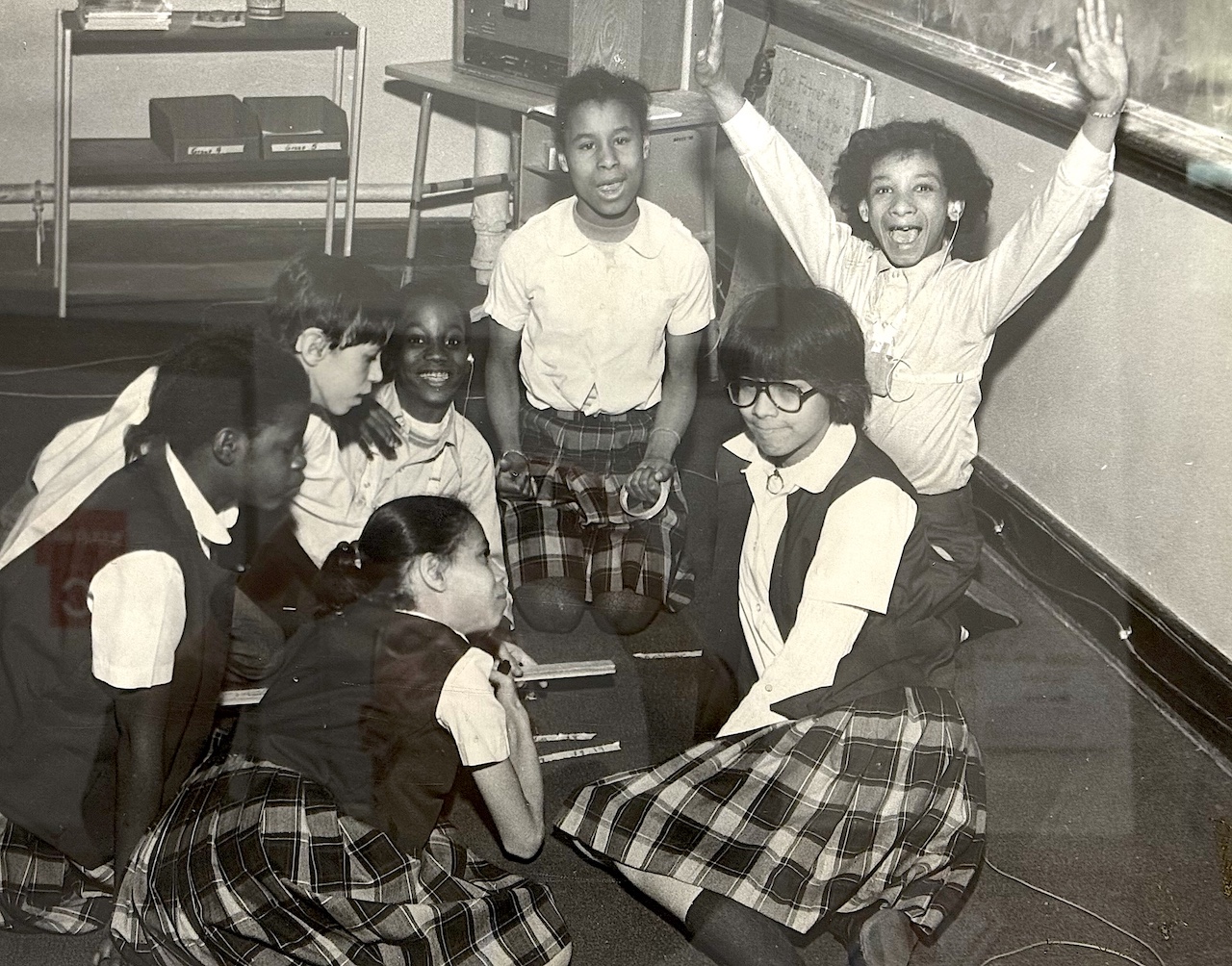
SFSD has had a few temporary homes since its opening in 1960 — the first being the Sisters of St. Joseph’s Convent in Flushing, Queens. By 1974, the high school vacated the now 100-year-old building, but SFSD stayed and received the deed from the Diocese of Brooklyn. It eventually became a secular school.
RELATED: Sisters of Charity Served Brooklyn Before There Was Even a Diocese
Still, its leaders chose to keep the school’s original name to honor its roots.
“There’s so much history here,” said Dr. Jodi Falk, the school’s executive director since 2019. “People feel very connected.”
Catholic leaders, who recognized the need for the school in the 1950s, asked the Sisters of St. Joseph to operate it, according to Falk. The first class in 1960 at the Flushing convent, with Sister Anne Behre the teacher, had four students.
“Remarkably, this was 15 years before Congress passed a federal law entitling children with disabilities to free and appropriate public education,” Falk said. “Historically, all over the country, it was religious organizations — mostly the Catholic Church and some Jewish organizations — that started all the schools for the deaf and blind.”
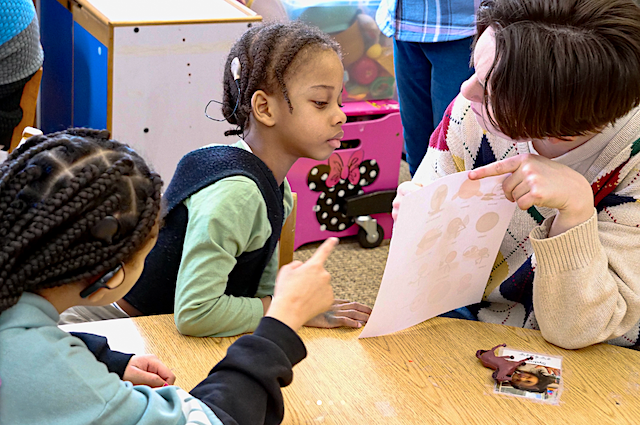
By 1973, SFSD had 180 students. Today, the non-public, New York State-supported school for deaf students serves 80 children. The non-public designation means they serve students with disabilities and provide programs for children whose educational needs cannot be met in public schools. These programs are designed for parents and infants, early childhood, and grades K-8.
SFSD’s history is depicted in the new Deaf & DeafBlind Museum & Research Center, which honors the legacy of educating children in New York City’s deaf community, under the leadership of its curator, Dr. Julia Silvestri. Artifacts include vintage electronic communication devices, hearing aids, school uniforms, plus textbooks, journals, archival materials, and art created by deaf and deaf-blind artists.
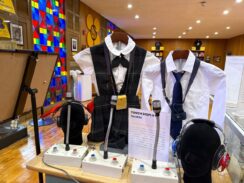
“This museum was created to honor our history and ensure that deaf and deaf-blind voices are preserved and accessible for generations to come,” Silvestri said. “Every artifact, book, and piece of artwork represents resilience, pride, and progress.”
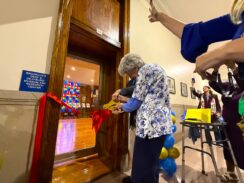
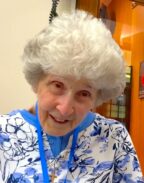
Sister Joanne Fuelner, the school’s second executive director from 1981 to 1992, cut the ribbon for the new museum. The event coincided with September being Deaf Awareness Month.
Sister Joanne, originally from Rego Park, is now retired at her community’s home in Brentwood, Long Island. She first learned American Sign Language as a teenage babysitter for a family with deaf children. That was a springboard to her career as a teacher for the deaf.
“I am happy to see the people and to go through the building and see how well they’ve kept it up,” Sister Joanne said. “They have done a wonderful job.”