
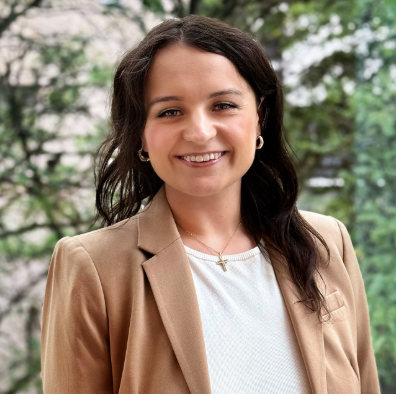

LOWER MANHATTAN — Twenty-five years after the Sept. 11, 2001, terrorist attacks, Gabriella Abate and Ian Dannenfelser are too young to remember the day that changed their families. Neither had even been born.
Both lost their grandfathers to illnesses linked to the aftermath of the attacks. On Sept. 2, those losses brought them back to the place where it began.
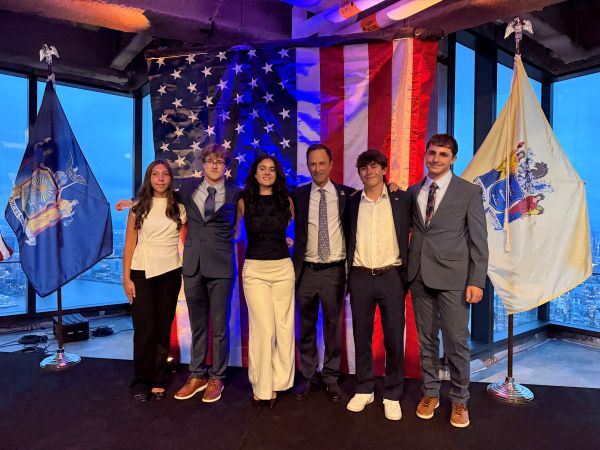
Abate and Dannenfelser were among six incoming college freshmen honored at 3 World Trade Center as recipients of $25,000 scholarships from the Barasch & McGarry Charitable Foundation. The scholarships support descendants of people who died from 9/11-related illnesses.
Michael Barasch, managing partner of Barasch & McGarry, said it was a way for the firm to mark the 25th anniversary of 9/11 by investing in families it has spent years representing. An independent party, the 9/11 Museum’s Visionary Network, selected the recipients.
“9/11 did not end on 9/11,” Barasch said. “Many people, especially those outside of New York, just think it was a one-day horrible tragedy, and it was.
“But it’s equally tragic to the families who have lost loved ones. My firm loses two clients every single day.”
RELATED: Too Young to Remember Attacks, Breezy Point Kids Visit 9/11 Victims’ Families in Queens
More than 400,000 people were exposed to the toxic dust at ground zero. In the nearly 25 years since the attacks, more than 9,000 people have died from 9/11-related illnesses, according to the World Trade Center Health Program — more than three times the nearly 3,000 people killed on Sept. 11, 2001.
Over 136,000 people are enrolled in the World Trade Center Health Program, with close to 90,000 of them having at least one certified 9/11-related health condition, including aerodigestive disorders, diseases that affect the lungs and the upper digestive tract, and cancers.
The toll is reflected in recently released FDNY figures. Of the department’s members enrolled in the World Trade Center Health Program, 10,562 are certified with at least one physical health condition linked to their exposure, while 4,257 currently have a cancer certification. Another 4,496 are certified with at least one mental health condition.
Abate experienced that toll within her own family. Her grandfather, Joseph Abate Sr., spent 37 years as an electrician for the NYPD and worked at ground zero to restore power after the attacks. He later developed 9/11-related lung cancer and died in 2021 at age 67.
Abate could not attend the ceremony on Sept. 2 as she had already begun her college career studying fashion merchandising in Italy at Marist University’s Florence campus. Her parents accepted the recognition on her behalf.
Abate brought a piece of the man behind her scholarship overseas with her: a photograph of her grandfather, whom she called “Poppy.”
“He was always there for his family, always there for anyone that needed it,” Abate said. “Always put in the work.”
Even as his health declined, she knew little about the extent of his illness.
“I always knew something was wrong,” she said, “but … he never made his problems anyone else’s.”
RELATED: 9/11-Related Illnesses Still Claiming Lives
Dannenfelser traveled to the ceremony from Penn State University, where he began his freshman year just one week earlier, studying mechanical engineering.
His grandfather, Gene Dannenfelser, was a chief fire marshal in Camden County, New Jersey. Although he was home on Sept. 11, 2001, he was eager to join the recovery effort.
“He would sit by the phone every day just waiting to be called to go help, because that’s all he wanted to do,” Dannenfelser said.
About a week later, that call came. His grandfather traveled to ground zero, where Dannenfelser said he was exposed to the toxic dust and debris. He later developed lung cancer and died in 2017, also in his 60s.
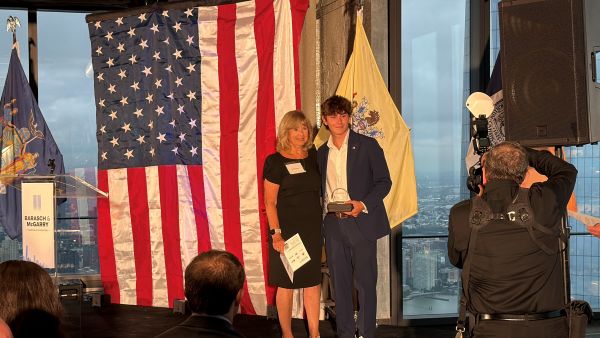
Despite being born years after the attacks, Dannenfelser said his grandfather made sure he understood what happened on 9/11 and the significance of the recovery effort he had been part of.
“I learned everything originally from him,” Dannenfelser said. After his grandfather died, he continued learning through visits to the 9/11 Memorial & Museum.
Now 18, Dannenfelser said he feels a responsibility to pass that history on to others his age, who are not old enough to know about the impacts of that day.
“I try to just spread what I know to other students and other kids,” he said. “I think it’s really important — learning and understanding the history.”
For Dannenfelser, the scholarship is also another way his grandfather’s influence will follow him into this next chapter.
“He always wanted to help us no matter what, so this scholarship is his way of helping me go through college and continue my future,” Dannenfelser said. “He’s helping me grow and become the person I’m meant to be.”
Jessica Easthope contributed to this story.