

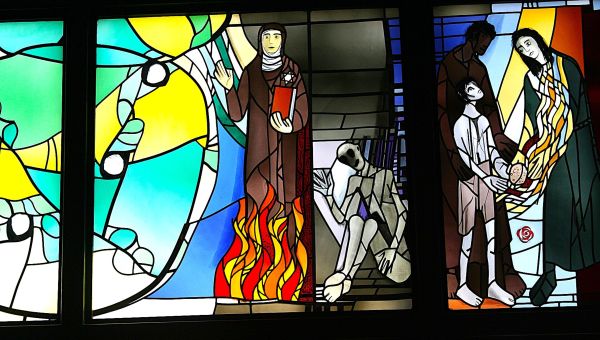
FLATBUSH — In 2027, Catholics will reflect on the 40th anniversary of the beatification of St. Teresa Benedicta of the Cross and the 85th anniversary of her martyrdom in the Holocaust.
They’ll also have the chance to consider what Jewish people revere about this woman, born Edith Stein in Germany in 1891.
Her family was Jewish, but after achieving renown as a philosophy professor, she converted to Catholicism and became a Carmelite religious sister. She was martyred at Auschwitz, which paved the way for her canonization and her becoming a patron for Europe.
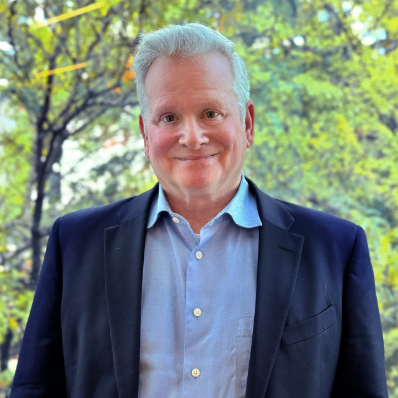
“Edith Stein stands between two worlds, Catholic and Jewish,” said Sister Celia Deutsch, who is active in local interfaith circles. “I first read about her when I was a teenager, and she’s always been one of my intellectual and religious heroes.”
But Sister Celia explained that while Catholics consider this saint a champion for the Church and women’s rights, and a martyr who was slain out of hatred for the faith, Jewish people have a different view.
They contend that Stein was martyred not because of her Catholicism, but because she grew up as a Jew. Consequently, they felt the Church ignored this position when St. Teresa Benedicta of the Cross was canonized by St. Pope John Paul II on May 1, 1987.
RELATED: St. Edith Stein: Born Jewish, She Became Catholic, and a Champion for Women
Some of these emotions are unresolved nearly four decades later, Sister Celia said.
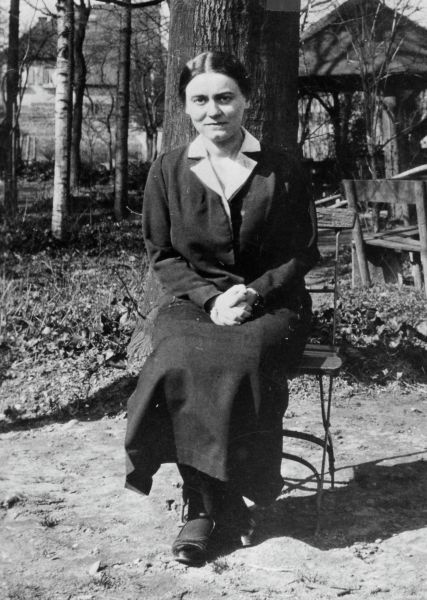
“Jews were offended that Catholics were appropriating her,” she said. “It’s important to understand this because I don’t think most people have a clue about the complications of this.”
Sister Celia is a biblical scholar and professor at Barnard College in Manhattan. She is also a longtime member of the Ecumenical & Interreligious Affairs Commission for the Diocese of Brooklyn.
Her community is the Congregation of Our Lady of Sion (NDS), founded in France in the mid-1800s.
According to their charter, these priests and religious brothers and sisters work to “witness in the Church and in the world that God continues to be faithful in his love for the Jewish people.”
Its founders were two biological brothers — Marie-Théodore and Marie-Alphonse Ratisbonne — who were Jews, but they, like Stein, converted to Catholicism.
Sister Celia, who grew up in the Chicago area, is the daughter of a Catholic mother and a Jewish father.
She recalled how, back in 1987, some Catholics were shocked that Jews were upset that Stein was canonized without regard to her place among victims of the Holocaust, in Hebrew called the Shoah. She said some people made further “stereotypical judgments about Jews being ungrateful, pushy, and not understanding.”
“Actually,” she said, “Jews understand very well.”
Born on Yom Kippur, on Oct. 12, 1891, in Breslau, Germany (now Wrocław, Poland), Stein was raised by her single mother. Her father, a lumber dealer, died when she was 2.
As a teenager, she embraced atheism.
Later, she served as a nurse in World War I, but also attended the University of Göttingen, and, in 1916, she earned a doctorate degree in philosophy. But during her research, Stein was enthralled by the Catholic philosophical teachings of St. Thomas Aquinas and others. Next, she read the autobiography of St. Teresa of Ávila. These experiences compelled her to convert, much to the dismay of her Jewish mother.
Still, Stein was baptized on Jan. 1, 1922.
She became a teacher and continued her research in philosophy. The rise of Nazism, however, made her unemployable because she didn’t have an “Aryan certificate” required for civil servants.
In April 1933, Stein wrote to Pope Pius XI urging him to denounce Nazism, but she got no response. Historians are now exploring the reports that the pope was working covertly to help the Jews.
Stein, meanwhile, joined the Carmelite Order in 1934. Four years later, with her sister Rosa — also a convert to Catholicism — the future saint fled to a monastery in the Netherlands to avoid the Nazis.
But in 1942, after the Nazis invaded the Netherlands, they pressed the Catholic bishops there to keep quiet about the deportation of Jews.
The Dutch bishops refused to be silent.
The Nazis retaliated by canceling an exemption from deportation for Jews who converted to Catholicism.
The Gestapo subsequently arrested Stein and her sister and sent them to the Auschwitz concentration camp complex, where, on Aug. 9, they were gassed upon arrival. Two other siblings from the Stein family, Frieda and Paul, also died in the Shoah.
However, one sister, Erna, a gynecologist, and her husband, Hans Biberstein, a dermatologist, left Germany because they, too, could not produce Aryan certificates to renew their physician licenses.
So, they came to Brooklyn, settled in Flatbush, and opened practices in Manhattan. Accompanying them were their two children, daughter Susanne and son Ernst Ludwig.
Erna became active in interfaith circles after learning of her siblings’ fate. When she passed away in 1978, Susanne Batzdorff, a librarian and author, took her mother’s place. Now, at age 104, Batzdorff is quietly retired in Northern California.
But her books and articles in publications such as America magazine and The New York Times lovingly convey how her “Tante Edith” was warm, funny, and always committed to her family despite her conversion.
She also wrote that her aunt was offered a chance to escape, but she declined it because her sister, Rosa, couldn’t come with her. She went to her death in solidarity with the millions of other Jews who died, Batzdorff wrote.
In the final chapter of her book, “Aunt Edith: The Jewish Heritage of a Catholic Saint,” Batzdorff writes that she attended the beautification and canonization of her aunt, but with mixed feelings due to the religious appropriation.
Still, she also commended Pope John Paul II for taking steps to acknowledge the silence from the Vatican regarding the Holocaust.
“Christians and Jews have already come a long way toward closer rapprochement and better understanding, but our work is not finished,” Batzdorff wrote in America magazine. “The Jewish people cannot forgive the perpetrators of the Holocaust, or those who stood by in silence. The survivors cannot forgive the death of the victims.
“We can, however, listen to the mea culpa of those who are truly repentant and leave forgiveness to God. If we examine our past and admit our mistakes honestly, we can go forward confidently and work together for common goals.
“And with God’s blessing we can go about the task of tikkun olam – repairing the world.”