

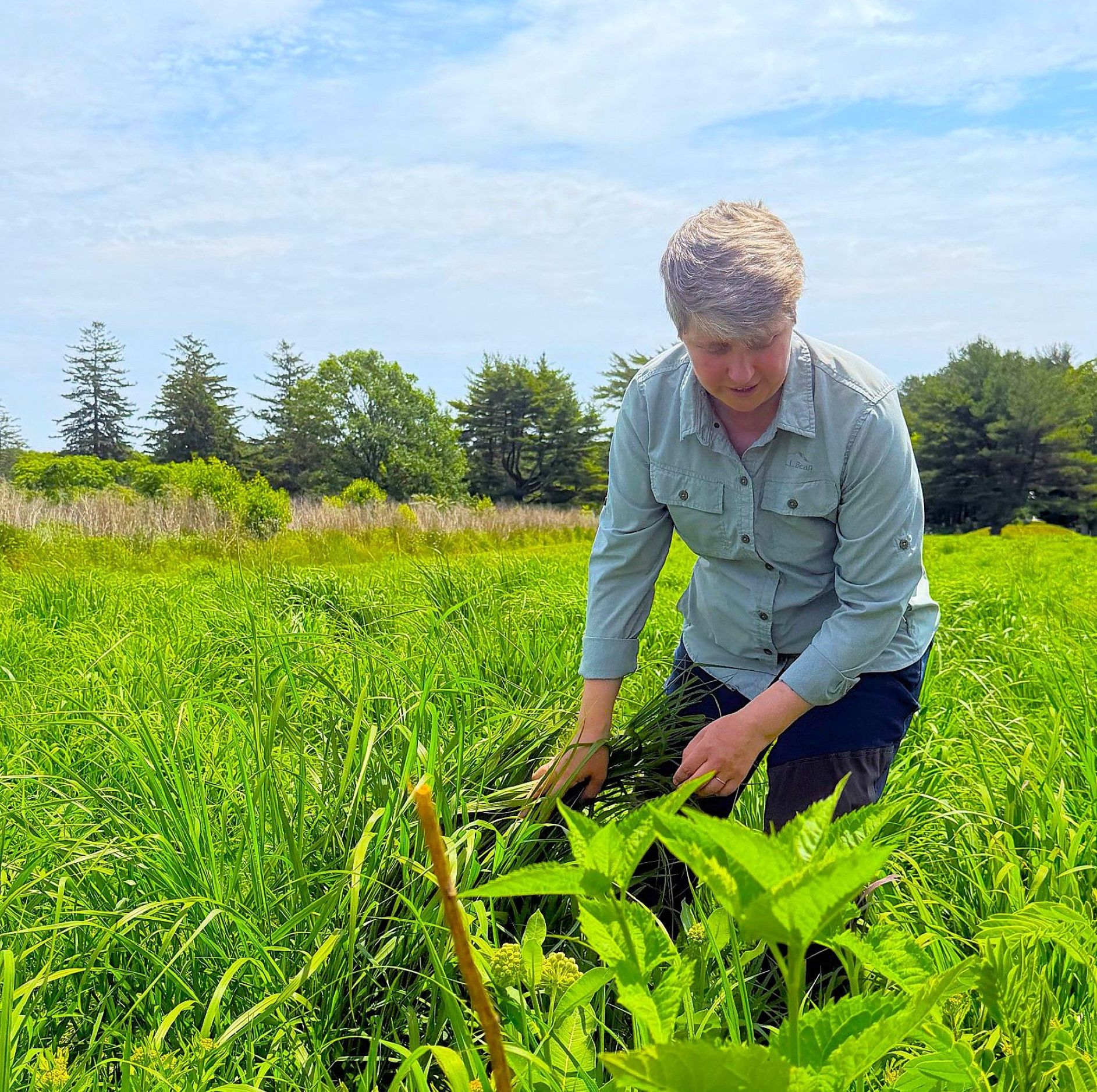
BRENTWOOD — A tiny spot of upturned dirt, lightly hidden by grass and fallen leaves, had the rapt attention of Heather Coste, who oversees ecological stewardship for the Sisters of St. Joseph of Brentwood.
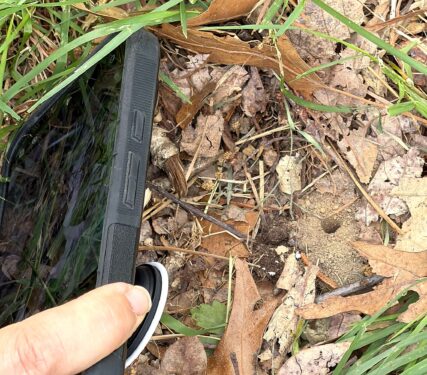
Drilled into the dirt speck was a perfectly round hole that a “digger” bee had just slipped into, Coste said.
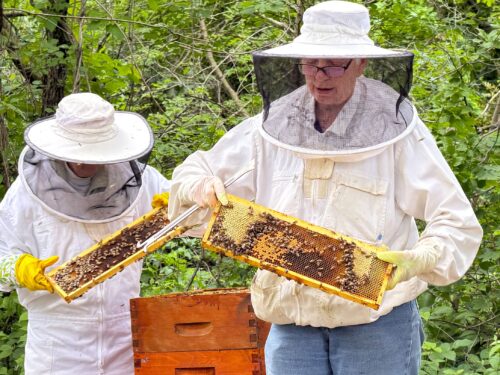
This bee, Coste said, was one of the native species that nest, birth, and feed their offspring underground. They are unlike the domesticated honeybees that live in man-made wooden hives like the ones standing just a few feet away from this digger bee’s nest.
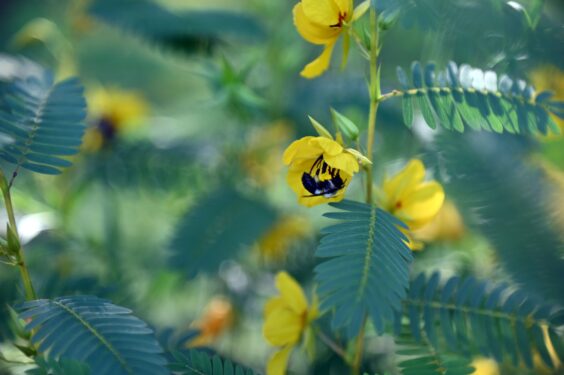
Digger bees, Coste explained, are solitary creatures unlike their hive-based neighbors. They’re also among the many “wild” or “native” pollinators essential for plant growth throughout nature, including the food-crop production that feeds humanity.
Native pollinators include bumblebees, parasitic wasps, beetles, fireflies, and moths, Coste said. Others include butterflies, bats, and hummingbirds, just to name a few.
“Honeybees are great for certain agricultural crops and some of our tree species, but they don’t do everything,” Coste said. “Our wild pollinators are doing the lion’s share of the work. So, when we’re doing pollinator support, we have to keep in mind all of these different species that have very different needs.”
To that end, the state of New York gave a $100,000 grant to the Sisters of St. Joseph of Brentwood to improve pollinator habitats on their 211-acre Long Island campus.
RELATED: Sisters of St. Joseph of Brentwood Recognized for Sustainability Efforts
Coste, the community’s director of ecological sustainability, said the two-year grant enabled the team to hire another staff member to broaden the work.
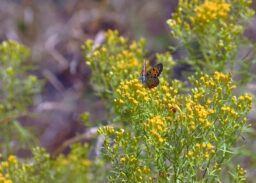
In April, they treated an 8-acre field with a controlled burn. Native grasses and plants returned, forming a lush meadow teaming with wild pollinators, such as monarch butterflies.
The state grant was one of 34 awards to community groups from The New York Pollinator Conservation Fund, established by Attorney General Letitia James.
The $3.2 million pool is the result of a 2023 settlement with Bayer CropScience after the state accused the pesticide maker of “misleading the public” about a weedkiller’s danger to pollinator species, according to James.
“Pollinators are the unsung heroes of our environment,” she said in the release. “Yet their very existence has been threatened by the harmful impacts of pesticides, habitat destruction, and climate change.”
Coste agreed that these factors contribute to accelerated losses of native pollinators, but while many people hear about alarming disappearances of pollinators, they assume it only involves honeybees.
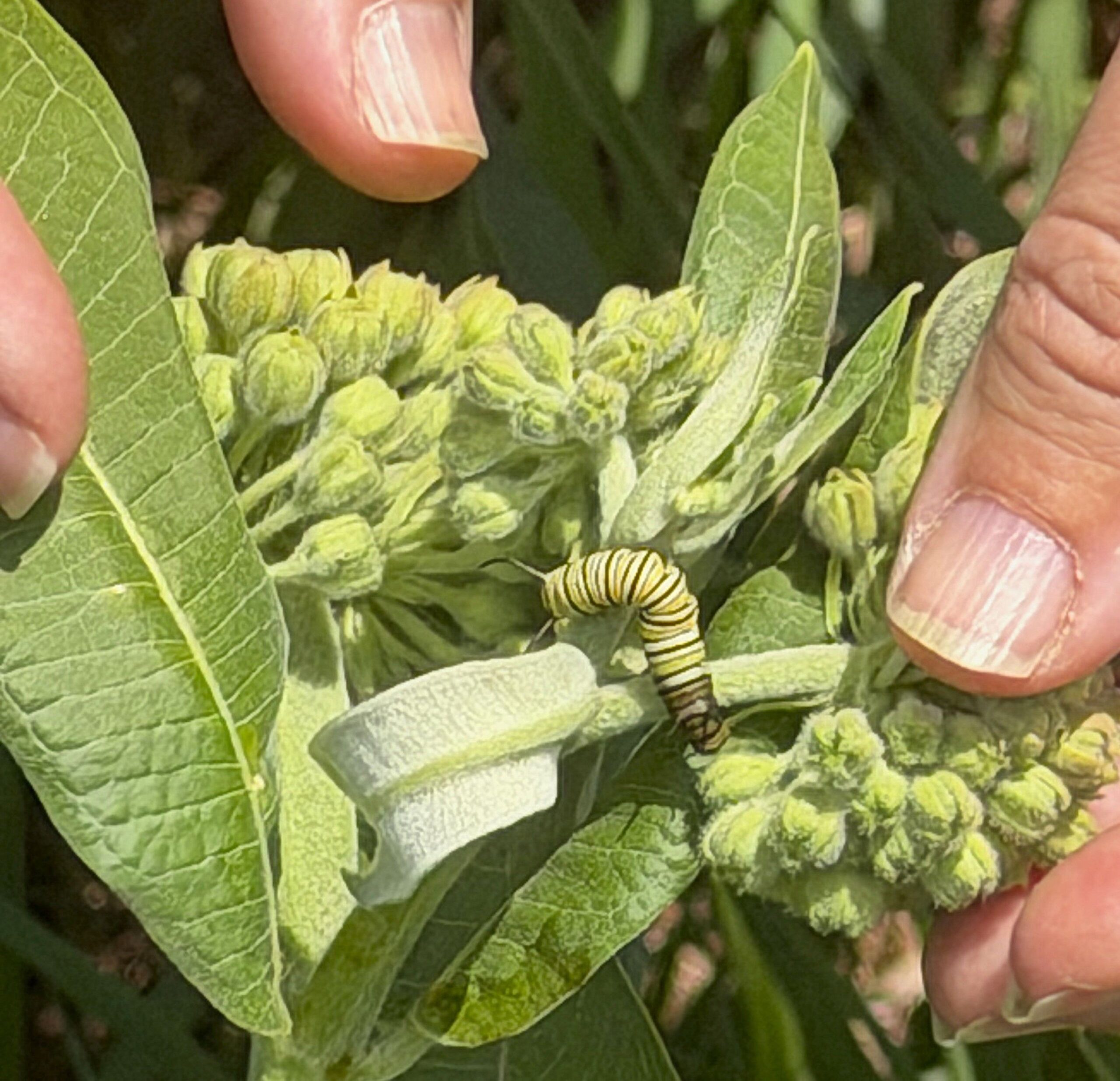
“It’s not even half of the story,” Coste said. “We’re losing our native pollinators at a much faster rate than we’re losing honeybees.”
The situation is critical, Coste added, because wild pollinators work while honeybees remain hive-bound.
“They’re a little bit finicky,” Coste said of the hive dwellers. “They only fly when it is warm enough, and when it’s not too windy.”
Meanwhile, native pollinators are at work in the chilly early months of spring when fruits like plums, cherries, and peaches need pollination, Coste noted.
“So,” Coste added, “if we were to lose all of our native pollinators, honeybees wouldn’t be able to pick up the slack.”
The honeybee hives at the Brentwood campus are managed by members of the Long Island Beekeepers Club. Its members confirmed the essential roles of native pollinators.
Grace Mehl, the club’s education director, also has a garden and a honeybee hive on her property in Smithtown.
But she credits wild bees and others for improving the garden.
Mehl, a retired U.S. Navy commander, said honeybees have been known to travel three to six miles, so they often ignore her garden.
“My bees come out of the hive and go up over the trees, and then they’re gone,” Mehl said. “They want to go to something big, like a great big poplar tree or a black locust tree.”
But many wild pollinators travel only 300 to 500 feet.
So, while Mehl’s honeybees are away, the natives make good use of the garden, she said.
Mehl’s property is a former chicken farm operated by her grandparents. Still, it has features suitable for digger bees and other wild pollinators, like the flowering plants they desire and trees that shed leaves needed to conceal the entries to their underground nests.
Mehl recently visited the Brentwood campus with Moira Alexander, the program director for the beekeeper club.
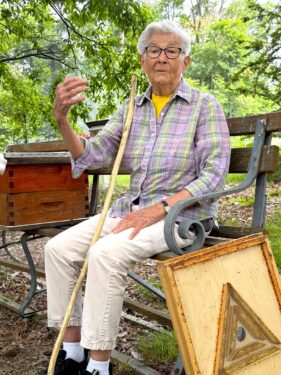
Meeting them were Coste and Sister Mary Lou Buser, 91, a member of the community who started the honeybee colony on the campus in the 1980s to improve the local gardens.
She no longer attempts the heavy lifting of gardening and beekeeping, but she loves being around it.
She explained that care for creation is a charism of her community.
“This is God’s creation,” Sister Mary Lou said. “Everything is interrelated, and it’s just such a beautiful thing. I’m happy to know of God’s creation, and I’m happy to be part of it.”