
View this post on Instagram
PARA LEER ESTE ARTÍCULO EN ESPAÑOL, HAGA CLIC AQUÍ.
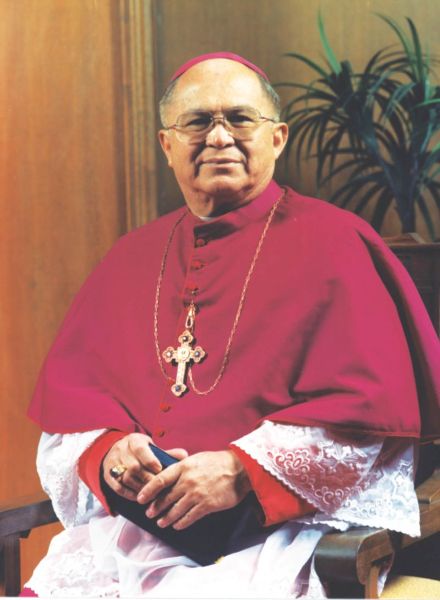
PROSPECT HEIGHTS — The first Hispanic Catholic bishop ever appointed in the United States left a rich legacy that is still felt today in the Archdiocese of San Antonio, where he served for decades, according to the current archbishop.
Archbishop Patrick Flores (1929-2017), a Mexican American, rose from humble beginnings as the child of migrant workers to leading the Archdiocese of San Antonio, where he served as an auxiliary bishop from 1970 to 1978 and as archbishop from 1979 until his retirement in 2004.
Archbishop Gustavo García-Siller, the current archbishop of San Antonio, said Archbishop Flores left his mark in many areas, including education, social justice, interfaith dialogue, and international relations.
RELATED: Auxiliary Bishop René Valero, Trailblazer in the Diocese of Brooklyn
“He was the first Hispanic bishop ordained in the United States. That is very powerful and meaningful,” Archbishop García-Siller said. “He was a very simple man, very shrewd, but very humble. He promoted higher education for people who were vulnerable.”
In 1975, Archbishop Flores established the National Hispanic Scholarship Fund, which has awarded an estimated $650 million in scholarships over the years, Archbishop García-Siller said.
Archbishop Flores was also instrumental in the opening of the Mexican American Cultural Center in San Antonio in 1972. Now called the Mexican American Catholic College, it serves as a training ground for clergy and laypersons working in Hispanic communities.
“It was the only center in the United States that was providing training for priests, bishops, cardinals, and lay people that were in positions of furthering the education and formation of Hispanics in the United States,” Archbishop García-Siller explained. “Now we have had many others in the last 15-20 years.”
Patrick Flores was born in Ganado, Texas, on July 26, 1929, one of eight children of Patricio and Trinidad Flores, migrant farm workers.
“He had a hard life,” Archbishop García-Siller said. “He had to drop (out of) grammar school in the last few years to work and support the family.”
RELATED: The Forgotten Church That Shaped Hispanic Ministry in the Diocese of Brooklyn
However, he later returned to school and ultimately graduated from Catholic Kirwin High School in Galveston. He studied for the priesthood at St. Mary’s Seminary in Houston and was ordained in 1956 in the Diocese of Galveston-Houston.
In 1969, Father Flores joined a group of Hispanic clergy to form PADRES, an organization dedicated to raising public awareness of the problems Hispanics face in society.
“It became an organization that was not just local. It went beyond Texas,” Archbishop García-Siller said. “So, it’s another part of his legacy.”
A year later, in 1970, Father Flores was appointed chair of the Texas State Advisory Committee to the U.S. Commission on Civil Rights.
That same year, Pope Paul VI appointed him as auxiliary bishop of San Antonio, where he served for eight years before Pope Paul VI appointed him bishop of the Diocese of El Paso.
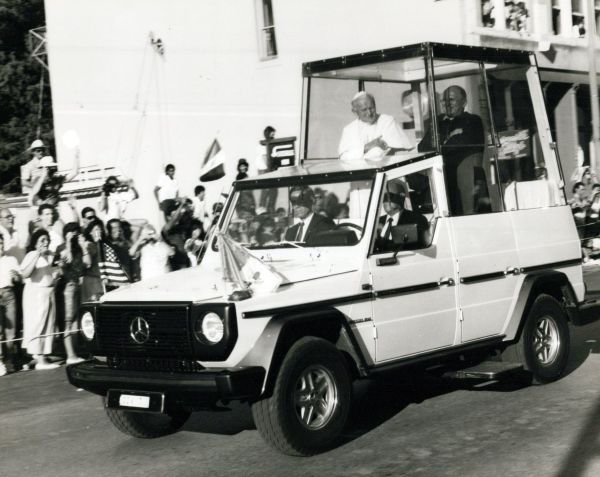
In 1979, Pope John Paul II appointed him archbishop of San Antonio, where he served until his retirement in 2004.
During his tenure, Archbishop Flores worked to build bridges with other faith leaders, Archbishop García-Siller said. For example, he worked alongside Protestant and Jewish leaders to provide food and other essentials to migrants and asylum seekers crossing over the southern border from Mexico into Texas.
Archbishop Flores also built bridges internationally.
“He went with two other prelates to Cuba during the time of (Fidel) Castro,” Archbishop García-Siller explained. “They were the first prelates allowed to get into Cuba since Castro was the head of state, and they went there to promote the freedom of political prisoners.”
He added that Archbishop Flores was “very instrumental in getting Castro to open the door for priests to minister in Cuba.”
After Archbishop Flores died on Jan. 9, 2017, Archbishop García-Siller presided at his funeral Mass at San Fernando Cathedral in San Antonio.
When Archbishop García-Siller was named archbishop of San Antonio in 2010, he met the retired Archbishop Flores, whom he recalled as a warm, generous man who made him feel welcome.
“He was very gracious,” he said, “very engaging.”