
by Gina Christian
(OSV) On Aug. 12, the U.S. Conference of Catholic Bishops (USCCB) published an updated version of the “Charter for the Protection of Children and Young People,” including revisions approved by the body of bishops in June.
Commonly known as the Dallas Charter — instituted by the U.S. Catholic bishops at their 2002 meeting as the scope of the clerical abuse scandals emerged publicly — it lays out a comprehensive set of procedures for addressing allegations of sexual abuse of minors by Catholic clergy. The Charter also includes guidelines for reconciliation, healing, accountability, and abuse prevention.
Among the revisions are a glossary of terms (the previous version didn’t have one), as requested by many dioceses; the integration of “the right of an accused to the presumption of innocence” and a reference to the protection of information under the seal of confession; as well as the identification of mandatory Church reporters to complement civil authorities.
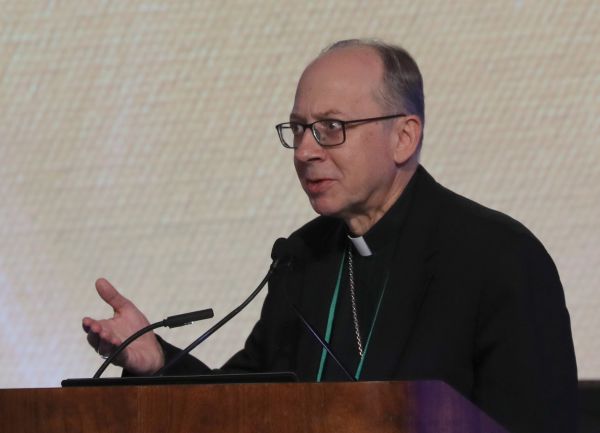
Back in June, when the changes were approved by the body of bishops, OSV News discussed the revisions with Bishop Barry Knestout of Richmond, Virginia, chair of the USCCB Committee on the Protection of Children and Young People, and Deacon Bernie Nojadera, executive director of the USCCB’s Secretariat of Child and Youth Protection.
The interview has been edited for length and clarity.
OSV: Both civil and canon law play roles in addressing clergy sexual abuse. Is there any interplay between the two in the Charter?
Bishop Knestout: Canon law is very clearly in focus here because civil law tends to be different depending on the jurisdiction, whereas canon law applies uniformly across every diocese and every priest and bishop.
We concentrated on making sure the revisions aligned with canonical provisions in Book VI of canon law. And we wanted the Charter revisions to align with other documents from the Holy See that do have the force of law — “Vos estis lux mundi” (which outlines how the Church should deal with clergy sexual abuse, including procedures for investigating bishops) and the “vademecum” (issued by the Vatican’s Dicastery for the Doctrine of the Faith in June 2022) on processes for implementing responses to accusations of abuse.
We tried to make sure the Charter was aligned with what has happened in the Church since 2018 (when a number of clerical abuse scandals emerged) and all the other adaptations or adjustments that have occurred in canon law since then.
Deacon Nojadera: I would add that the Church is looking at possible legislation coming forward specific to spiritual abuse and other forms of abuse. There are developments coming down from the Holy See, from the Pontifical Commission for the Protection of Minors. The U.S. Catholic Church stands ready once those documents do come forward. We are looking at a review (of the Charter) in seven years’ time, so we would again have that opportunity for further discussion and discernment.
OSV: The word “trust” appears several times throughout the Charter. Where do you think the Catholic Church in the U.S. is in rebuilding trust following the clerical abuse scandals?
Bishop Knestout: Trust is being rebuilt, but there’s still a lot of trauma, and I understand that. We certainly have experienced that with those that we’ve heard from in all the consultation for this (Charter update). This document affirms the commitment of the bishops to address and to care for victim survivors and for the family (of) faith, the Church, so they have confidence and trust that it’s being handled effectively.
Yet, it is an ongoing project.
OSV: What would you say to the average U.S. Catholic in the pew about the charter and your efforts to prevent and address clergy abuse of children and young people?
Bishop Knestout: I’d say that the bishops are still firmly committed to respond to, with transparency and accountability, any complaints, accusations that come up about the misbehavior of clergy, especially regarding to children and young people.
We also affirm and are committed to responding with charity, attentiveness, and accompaniment. We express that in the Charter.
For victims and survivors of abuse, no matter when it might have occurred — we have great love for them and for the Church, and we were trying to make sure that the Church’s work of both reconciliation, healing and charity is strengthened.