
Two local bishops offered prayers for victims after a shooting left one person dead and more than 20 people injured at the conclusion of the Kansas City Chiefs’ Super Bowl victory parade in front of Union Station on Ash Wednesday.

Two local bishops offered prayers for victims after a shooting left one person dead and more than 20 people injured at the conclusion of the Kansas City Chiefs’ Super Bowl victory parade in front of Union Station on Ash Wednesday.

Ash Wednesday, on Feb. 14 this year, takes place on an earlier date than some years, which raises questions about why the holy day is not on a set spot on the calendar.

Kansas City Chiefs fans are looking forward to a Super Bowl victory parade Feb. 14 — but for Catholics, who mark Ash Wednesday that same day, “first place always goes to the Lord Jesus and what he’s done,” said Bishop James V. Johnston of Kansas City-St. Joseph, Missouri.

The Super Bowl win in overtime by the Kansas City Chiefs Feb. 11 means San Francisco Archbishop Salvatore Cordileone will be sending Bishop James Johnston Jr. of Kansas City-St. Joseph, Missouri, some food, and a donation to a diocesan pro-life center.

Raising public awareness about the role of slavery in building the U.S. Catholic Church and sparking hopes for racial justice and reconciliation were themes that emerged in a recent discussion at The Catholic University of America in Washington.
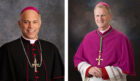
In recent years, the bishops of the dioceses of the competing Super Bowl teams have often taken part in a friendly wager on the game’s outcome, usually agreeing to send local food to the winning bishop or a donation to a charity in the winning diocese.

Super Bowl ads get a lot of attention. People stay in the room to watch them and then talk about their favorite ones for the next few days, or in some cases even before the game is televised.

Volunteers are the backbone for many social service agencies as they distribute food, clothes, and necessities to those in need.

Florida’s Supreme Court justices Feb. 7 did not seem supportive of the challenge by state officials over a ballot initiative that aims to keep abortion protections in the state Constitution.

Attorneys for a group of death row inmates in South Carolina argued before the state’s Supreme Court Feb. 6 that the use of the electric chair and firing squad for executions violates the state constitution’s prohibition of cruel and unusual punishment.