
DOWNTOWN BROOKLYN — Father Joseph Gibino is a busy man, so he cherishes his vacations.
He has several responsibilities in the Diocese of Brooklyn, including vicar for evangelization and catechesis. He is also the pastor of St. Charles Borromeo Parish in Brooklyn Heights and the rector of the Cathedral Basilica of St. James in Downtown Brooklyn.
Recently, he took on host duties for the new show, “Faith Explained,” which airs on NET-TV.
When he has downtime, Father Gibino hits the road, but with another identity.
He is also Dr. Joseph Gibino, an anthropologist with pre-doctoral work at UC Berkeley and his doctorate from the University of Rochester.
His specialty is “symbolic” anthropology, which falls under the umbrella of sociocultural anthropology.
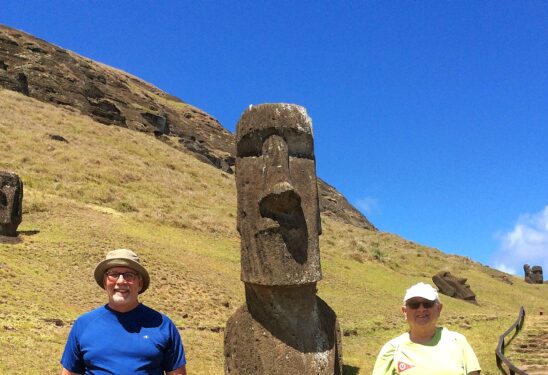
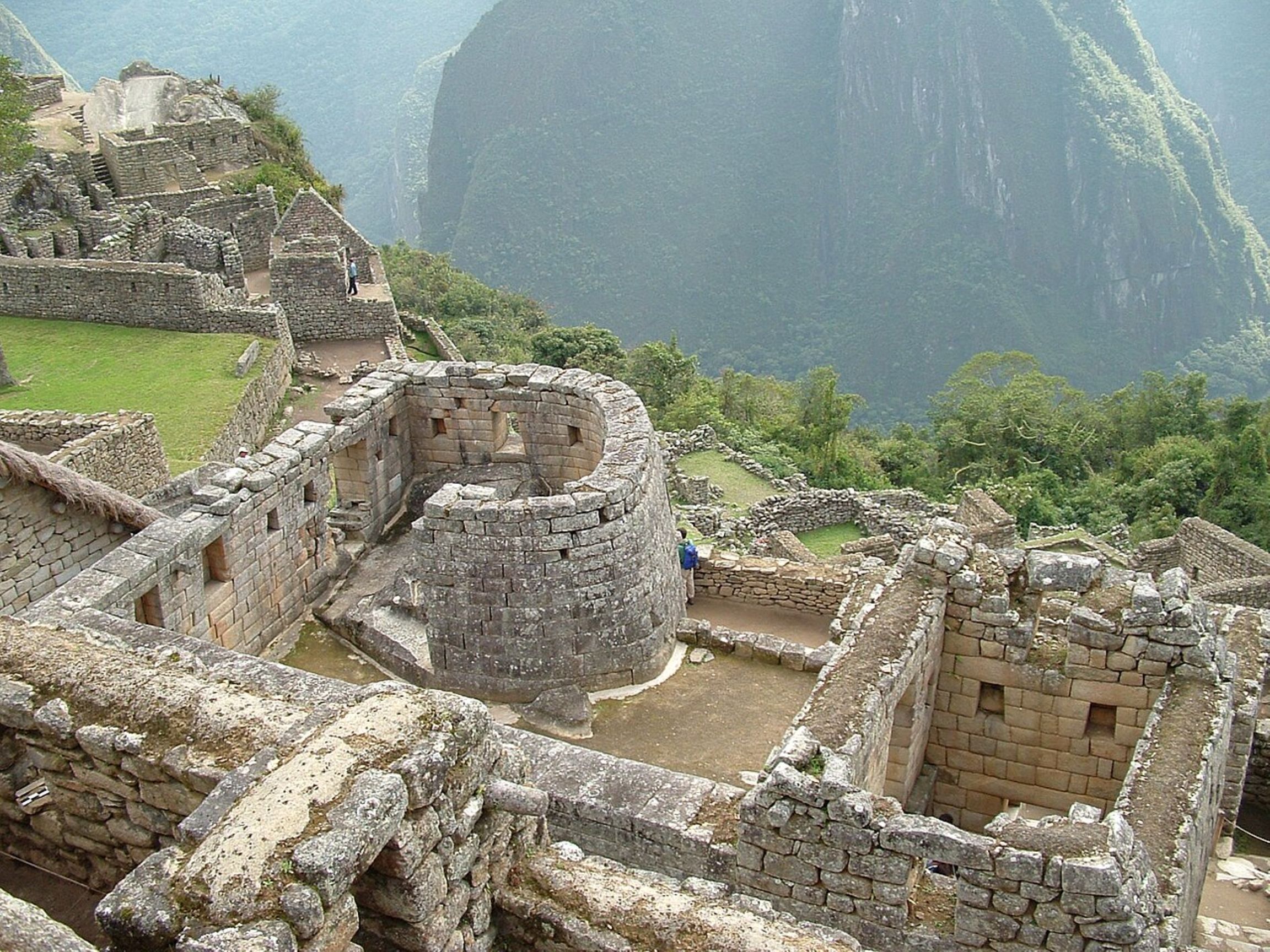
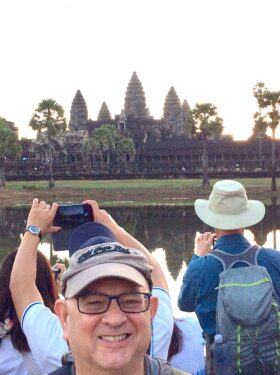
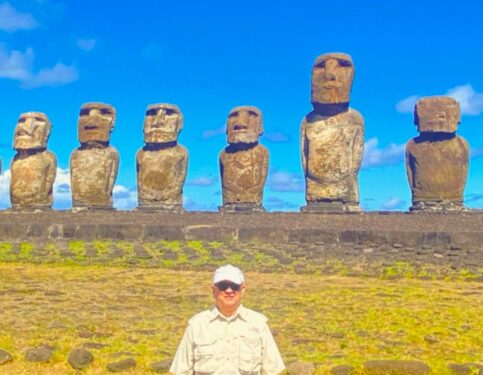
As such, he has toured mysterious UNESCO World Heritage Sites, like the mountainous Inca citadel of Machu Picchu in Peru, Easter Island off the coast of Chile with its massive stone-faced Moai statues, and the Great Pyramids of Egypt. He also visited the Angkor Wat temple complex near Siem Reap, Cambodia.
Although these sites have another draw for him — they’re also focal points for “ancient astronaut” theories about unidentified flying objects and extraterrestrial life.
“I’ll just devour anything that’s out there,” Father Gibino said of UFO lore. “I would have loved to have been the first priest in space. A lot of people have told me I already am the first priest in space!”
Welcome to Father Gibino’s other wheelhouse, where the comprehension of human origins (anthropology) intersects with ufology — the study of unidentified flying objects (UFOs) or, in modern terms, unidentified anomalous phenomena (UAPs).
The priest/anthropologist added, however, that while some people see him as “a nut job,” his perspective on UAPs is “balanced.”
First, Father Gibino explained that he does not know if UFOs or extraterrestrial beings are real. Still, he’s open to the possibility, even though the Church has no official dogma on life beyond Earth.
However, Father Gibino is convinced that creation has but one source — God.
But he added that while the Church has no official dogma on extraterrestrials, the idea of them is consistent with Church doctrine on creation, a stance taken by the Vatican’s own astronomer.
“In Catholic tradition,” he continued, “there has always been a view that life is life, and, therefore, since God creates all life, all life has an inherent dignity.
“So, from a theological and philosophical standpoint, I am very open to the possibility that somewhere out in the cosmos there is life created by God.”
Other people, meanwhile, are convinced extraterrestrials do exist.
A furor over “alien” life has accelerated in recent years as “whistleblowers” clamored for transparent UAP “disclosure” from the U.S. government and its military.
They’ve alleged that governments throughout the world, including the Vatican, possess evidence of UFO sightings and recovered extraterrestrial technology.
Father Gibino’s specialty in sociocultural anthropology is “symbolic” anthropology, which explores how people construct meaning, knowledge, and reality.
To that end, he has researched how ancient cultures used symbols, rituals, and myths to make sense of their worlds and determine what is real — such as how they came into being.
Such questions mirror the intellectual challenges posed to Catholic seminarians as they pursue undergraduate degrees in philosophy.
RELATED: Lights, Camera, Catechesis: Father Joseph Gibino’s Show Takes on Big Questions in Brooklyn
Father Gibino said he has been enthralled with UFOs since he was a kid. He watched a lot of low-budget, black-and-white science fiction movies, and some classics, like “The Day the Earth Stood Still,” and voraciously read the works of acclaimed sci-fi authors Arthur C. Clarke and Isaac Asimov.
In the 1970s and 1980s, he enjoyed the movies “Close Encounters of the Third Kind” and “Starman” for their sympathetic portrayals of the mysterious aliens, as opposed to the marauding invaders in “War of the Worlds.”
Armed with his credentials in anthropology, philosophy, and theology, he set out to explore the UNESCO sites, including those with reputations for alleged extraterrestrial influences.
“When you add layer upon layer of science and theology together — now you’re beginning to get a cosmos that is so much more interesting than just a B-movie from the 1950s,” Father Gibino said.
Still, he asserted, the existing theories of extraterrestrial influence on ancient cultures are not definitive for him.
For example, the Moai statues on Easter Island and the Great Pyramids were noted by Erich von Däniken in his 1968 book “Chariots of the Gods?” as being monuments that required greater technology than ancient cultures had — the kind of tech only mustered by an advanced species capable of space travel.
That thesis has carried over into modern documentary series like “Ancient Aliens,” which casts Machu Picchu and Angkor Wat under speculation of extraterrestrial influences.
Other shows have explored the possibility of underwater UAPs, and Malta, south of Sicily, has become a hotspot for alleged sightings, Father Gibino said.
All very fascinating, he said, but be careful.
Recent discoveries suggest that some ancient cultures were no slouches at civil engineering, Father Gibino said.
For example, he said, Hollywood has made movies like “The Ten Commandments,” showing that the pyramids were built with slave labor.
However, Archaeological evidence taken from the laborers’ villages suggests they were well-organized, well-trained, and well-fed artisans who were paid for their work, Father Gibino said.
RELATED: Angels or Aliens? Some Researchers Say Vatican Archives Hold UFO Secrets
Likewise, he added, archaeological evidence shows that the Rapa Nui on Easter Island had an elaborate pulley system to “walk” the Moai statues upright from the quarry where they were cut — not extraterrestrial magnet technology, as some ufologists suggest.
“It was primitive technology,” Father Gibino said of the pulley system, “but still technology.”
Therefore, Father Gibino said, he has yet to see definitive evidence of extraterrestrial life, so any UAP theories should be thoroughly researched.
“There’s a lot of very important science and theology that has to inform the discussion,” Father Gibino said. “At the same time, it takes a lot of devotion to the enterprise of understanding what extraterrestrial life does mean, as opposed to what Hollywood wants us to believe.”
The possibilities, meanwhile, still enthrall him.
“I’d like for it to be true — I just don’t know,” Father Gibino said. “But, quite honestly, if we were to find intelligent life elsewhere, doesn’t that just more reflect God’s infinite creativity?”