

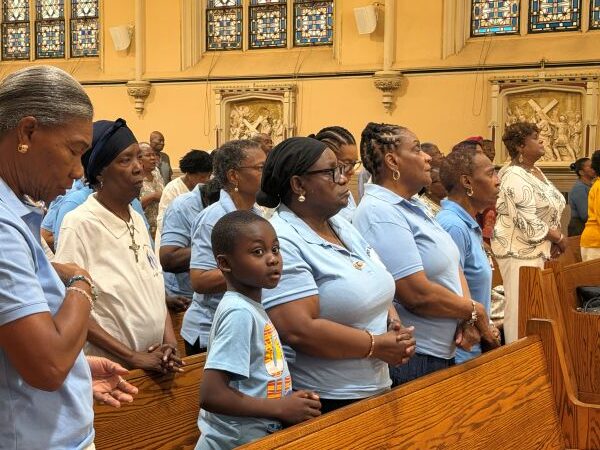
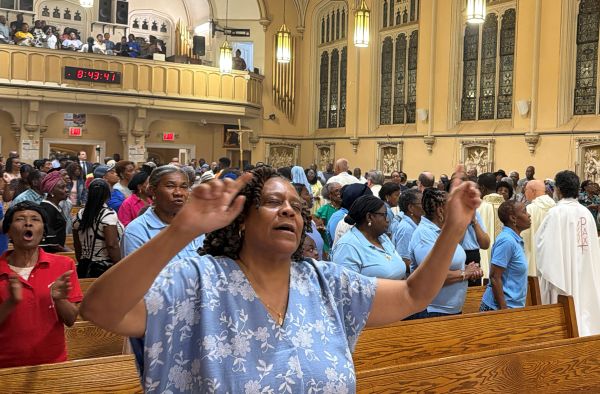
LITTLE HAITI — As mass deportations loomed following the end of Temporary Protected Status for Haiti on July 27, members of the island nation’s diaspora filled St. Jerome Church seeking spiritual solace and direction.
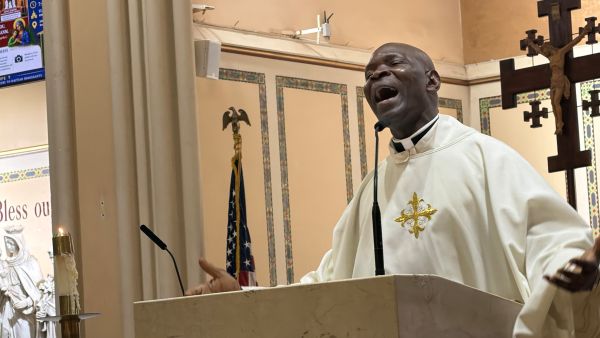
On July 29, hosted by the Diocese of Brooklyn’s Haitian Apostolate, Bishop Robert Brennan celebrated a Mass of solidarity and healing for people affected by the end of the protective status.
Commonly called TPS, this status prevents the deportation of eligible migrants in the U.S. who cannot return to their homelands because of wars or other dangerous conditions.
For Haitians, this round of TPS allowed them to come to the U.S. following the 2010 earthquake that ravaged their homeland. However, the Supreme Court last month restricted challenges to the Trump Administration’s ability to revoke TPS for Haitians and Syrians.
Father Hilaire Belizaire, director of the Haitian Apostolate and pastor of St. Jerome Parish, located in the Little Haiti section of Flatbush estimated that about 200 people attended the Mass.
However, he noted, many more parishioners, who had TPS, stayed home due to fear of instant arrests and deportations.
“Usually there shouldn’t be any standing room here at St. Jerome,” Father Belizaire said after the Mass. “But they don’t want to come out because they don’t want to take a chance. I try to explain to people that there’s due process.”
An estimated 300,000 to 350,000 Haitian immigrants are in the U.S. under TPS, at least 20,000 of whom may be in Brooklyn and Queens, according to Father Belizaire.
Their anxiety is palpable, he noted, now that TPS is gone, and they face deportation to their strife-torn homeland.
In the years following the earthquake, Haiti has plummeted into political, social, and economic chaos, including the assassination of President Jovenel Moïse in 2021. Meanwhile, a rise in gang violence has throttled the distribution of humanitarian aid and services.
“This week, I had this lady who came to speak to me,” Father Belizaire continued. “She was the owner of a restaurant in Port-au-Prince, but she had to leave everything behind except the clothes on her back because the gangs came and took over everything.”
He said this woman and others like her now face a “double trauma” — having fled the danger back home and now having to go back to it.
In addition, the loss of TPS means they are no longer eligible to legally work in the United States. So, Father Belizaire said, they have no income if they adhere to that directive, and employers might be breaking the law if they continue paying them to work.
TPS for Haiti was originally set to expire on Feb. 3, but the U.S. District Court for the District of Columbia issued an order staying the termination. Subsequently, the Supreme Court ruled 6-3 in June that federal law blocks courts from reviewing decisions by the U.S. Department of Homeland Security (DHS) to end TPS.
DHS officials insist that the temporary status was designed to be just that – temporary. Those who choose to self-deport qualify for a $2,600 government check and a free plane ticket back to Haiti.
James Percival, DHS general counsel, said President Donald Trump has sought to end TPS programs since 2017.
“These people have been on notice for nine years that this day is coming,” Percival said in an interview with Fox News. “So, what we would say now is it’s closing time, which means you don’t have to go home, but you can’t stay here.
“The good news is it’s not too late to get a $2,600 check and a free flight home.”
After Mass, Stephanie Delia, a Haitian-born U.S. citizen and immigration lawyer, gave a brief legal clinic, in Creole, to the congregation.
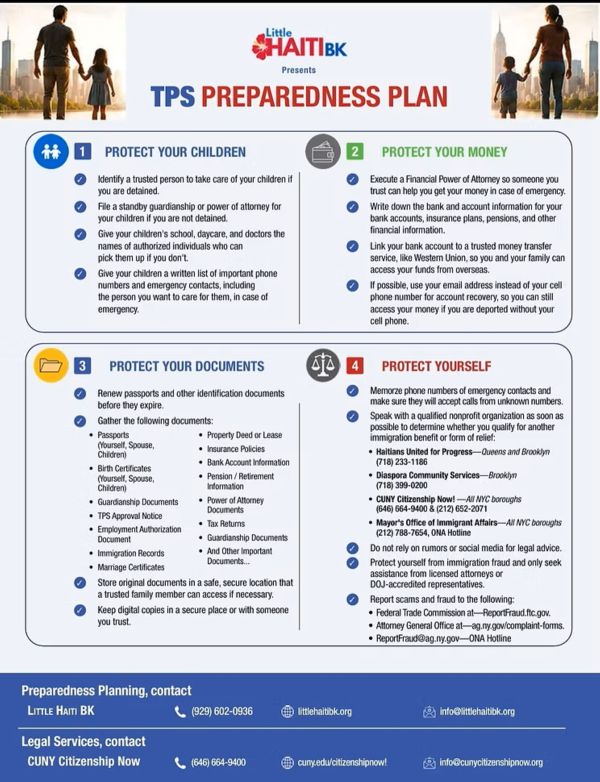
She described a four-point strategy for dealing with post-TPS deportations:
- Protect your children by designating a trusted person to care for them through a standby guardianship, and be sure that your child’s school, daycare, or doctor has that information.
- Protect your money by filing a financial power of attorney — a trusted person who can help you retrieve cash and other assets for you and link bank accounts to a money transfer service like Western Union to ensure access overseas.
- Protect documents like passports, birth certificates, and immigration papers that a lawyer will need to represent you; store them in a safe, and make digital copies accessible by someone you trust.
- Protect yourself by learning how to identify fake immigration services and identify contacts for legitimate non-profit groups that help immigrants, such as Little Haiti BK.
Delia said the strategy is designed to be short and simple.
“It started with just protecting your kids,” she said. “And then it became about, ‘What do you do to make the biggest impact on what happens? What can you control now? What is the ‘any and everything’ that could go wrong?’ ”
Bishop Brennan said after the Mass that the U.S. bishops have urged the government not to end TPS, “but to no avail.”
“This is a very big disappointment,” Bishop Brennan said. “It’s not only morally unjust and wrong, but certainly, I don’t think it’s in the best interest of our own country. Our economy and our healthcare system are so dependent on people from the Haitian community.
“The people came here with good faith. These are not people who gamed the system.”
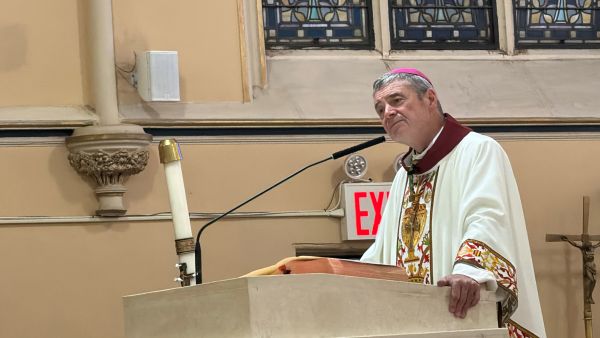
During his homily, Bishop Brennan soberly told the congregation, “I wish I could stand here and say, ‘Don’t worry, it’s going to get better.’ ”
“But,” he added, “what I will say, and I say it with confidence, are those words of the Father to Jeremiah. Indeed, God tells you, ‘That I am with you’ (Jeremiah 15:20).
“Sometimes it’s hard to see where that’s going, living in the moment, but we pray mightily tonight that through this Cross, and through the experience of Christ’s resurrection here, that even now we will experience the power of that newness of life and be able to look back on this moment, emerging victoriously to Christ.”
CLICK THE IMAGE BELOW TO VIEW THE TPS PREPAREDNESS PLAN FROM LITTLE HAITI BK.
KLIKE SOU IMAJ KI ANBA A POU WÈ PLAN PREPARASYON TPS LA NAN LITTLE HAITI BK.