by Katarzyna Szalajko, OSV News
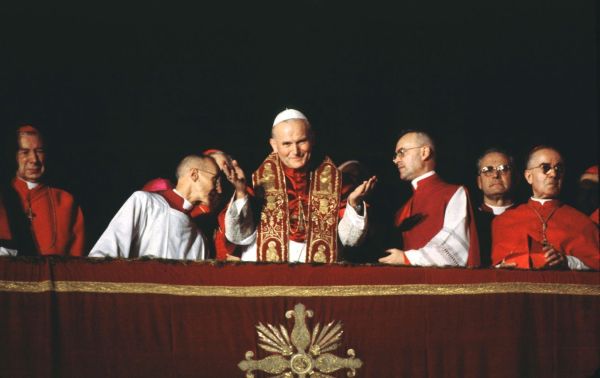
WARSAW, Poland (OSV News) — Eighty years after the priestly ordination of St. John Paul II, those who knew him and scholars who study his legacy say the future pope’s example still offers a model for priests today: deep prayer combined with close accompaniment of others.
Karol Wojtyla was a young man whose path to the priesthood took shape during World War II, in a clandestine seminary under Nazi German occupation. Few could have imagined that the young priest would one day become Pope John Paul II, lead the Catholic Church for more than 26 years and draw millions to his public appearances.
Eighty years ago, on Nov. 1, 1946, Wojtyla was ordained a priest in a private chapel in the Archbishops’ Palace of Kraków, Poland.
Eight decades later, those who knew him and those who study his legacy say his priesthood offers a lesson that remains relevant today: how to combine a deep spiritual life with genuine attention to other people.
“He was, above all, a man of prayer,” Cardinal Stanislaw Dziwisz, who spent nearly four decades at John Paul II’s side, told OSV News.
RELATED: Plaque From Pope John Paul II’s Historic Aqueduct Mass Rescued From Queens Racetrack
For Father Lukasz Piórkowski, director of the Family Home of John Paul II Museum in Wadowice, Poland, another quality was just as important. “Wojtyla accompanied people; he did not impose,” Piórkowski told OSV News. “He inspired, encouraged and showed different ways of acting and thinking together.”
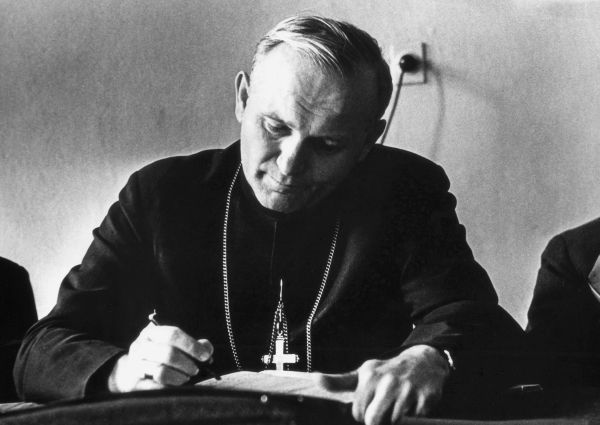
Wojtyla was 26 when he received holy orders from Cardinal Adam Stefan Sapieha on Nov. 1, 1946, the feast of All Saints.
He was ordained alone, ahead of his fellow seminarians, before leaving for theological studies in Rome. The following day, All Souls’ Day, he celebrated his first three Masses in St. Leonard’s Crypt beneath Wawel Cathedral, including one for his deceased parents and siblings. He had lost his mother when he was 8, his older brother when he was 12 and his father when he was 20. He had an older sister, who died in infancy shortly after birth, before Karol was born.
Half a century later, John Paul II returned to those memories in a 1997 letter to priests he would publish every Holy Thursday as pontiff. “I remember vividly the impression made by the words of consecration when I uttered them for the first time together with the Bishop who had just ordained me,” he wrote.
His path to the priesthood had not been obvious from the beginning. Passionate about literature and theater, Wojtyla initially studied Polish literature at Jagiellonian University before World War II interrupted his education. In 1942, while working at a factory, he entered the clandestine seminary organized by Cardinal Sapieha.
Cardinal Dziwisz recalled stories passed down by people who had known him at the time.
“As a young man, he was not thinking about the priesthood. But his personal life was deeply spiritual,” Cardinal Dziwisz told OSV News.
One of his closest friends was Jerzy Kluger, Wojtyla’s Jewish school friend from Wadowice. According to the cardinal, Kluger remembered studying with Karol and other classmates for their final examinations. Every so often, Wojtyla would leave the group to pray. Dziwisz also recalled the influence of Wojtyla’s father, a former Polish army officer, also named Karol. John Paul II called his father’s example a kind of “domestic seminary.”
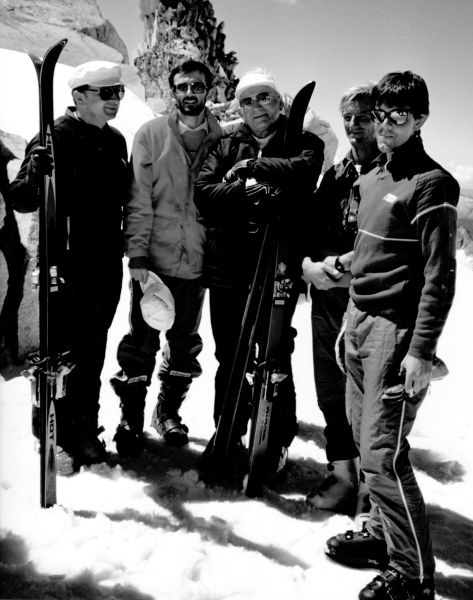
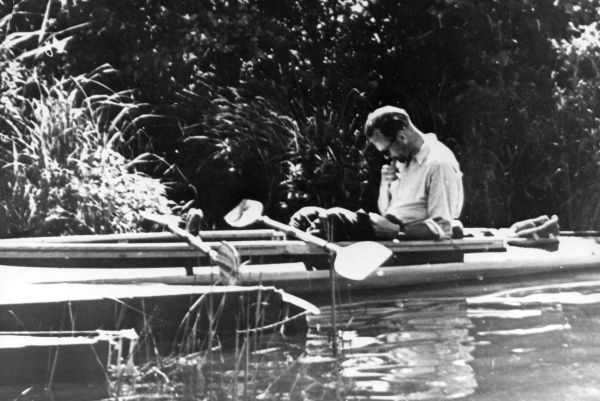
After his ordination and studies in Rome, Wojtyla returned to Poland in 1948. His pastoral work eventually brought him into close contact with university students, with whom he developed relationships that lasted for decades. “Even when he was a professor, young people were already seeking him out,” Cardinal Dziwisz told OSV News.
“They wanted to spend their vacations with him, around campfires, kayaking or skiing,” he recalled. “For him, it was not just recreation. It was an opportunity to be with young people and help them grow.”
For Father Piórkowski, those relationships are among the most important things contemporary priests discover when they visit the John Paul II museum in Wadowice, the town where the future pope was born in 1920.
“They discover the power of this experience of synodality in the Church, of accompanying people,” Father Piórkowski told OSV News. “I think this approach of thinking together and accompanying one another is inspiring for priests today.”
The anniversary also has a personal meaning for him. “It is the experience of a man who discovered himself through his relationship with God and with another person,” Father Piórkowski told OSV News. “In today’s world, Wojtyla continues to teach me how to stay in touch with reality while recognizing that God is a living person.”
RELATED: 30 Years Later, St. John Paul II’s Enduring Challenge to Culture in ‘Evangelium Vitae’
Father Piórkowski said he finds John Paul II’s humanism inspiring in his own ministry, particularly in the effort to listen carefully to people of different ages.
Cardinal Dziwisz, who was ordained by Bishop Wojtyla in June 1963 and became his secretary three years later, witnessed that spiritual life from exceptionally close range.
“When he was younger, he would … lie prostrate in prayer,” Dziwisz told OSV News. The cardinal recalled that the chapel door would be kept closed so the pope could pray without interruption. “From a distance, we could hear him speaking to Christ in the tabernacle,” he said. “Sometimes he prayed in a low voice, sometimes aloud. During Christmas and Lent, he would sing as he prayed.”
For the cardinal, prayer was not separate from the pope’s public responsibilities. It shaped how he approached them.
Cardinal Dziwisz remembered an occasion when a Vatican official came to John Paul II with a difficult problem they did not know how to resolve.
“We haven’t prayed enough,” the pope replied, according to Cardinal Dziwisz. “We need to pray. Some guidance will come from above,” the pope said.
View this post on Instagram
The cardinal recalled that John Paul II considered prayer essential before making important decisions affecting people’s lives. He also remembered how the pope prayed for those who gathered in St. Peter’s Square, even during general audiences.
“People perhaps did not know it, but those who knew the pope knew that he was praying for those who were in the square, cheering,” Cardinal Dziwisz told OSV News.
For Father Piórkowski, the same approach to priesthood remains relevant under Pope Leo XIV. He believes each pontificate draws on the experience of those that came before it.
“I am convinced that Pope Leo, bearing in mind the experience of his predecessor, is rooted in John Paul II’s experience,” Piórkowski told OSV News. “To be close to another person. To be close to Christ,” he said. “In the present context, when the world is asking questions about its own identity, these two elements are very important.”