


The Cursillo de Cristiandad, or short course of Christianity, is a worldwide lay movement whose members are called to know Christ better and become instruments of evangelization in their homes and communities by embracing the principles of study, piety and action.

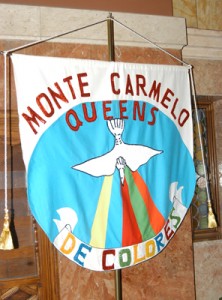
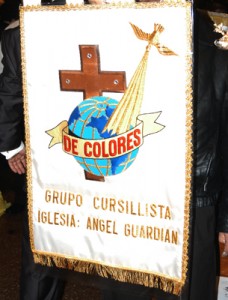
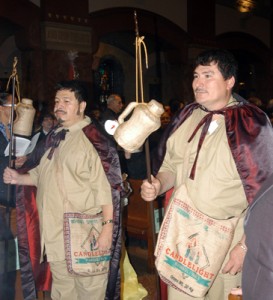
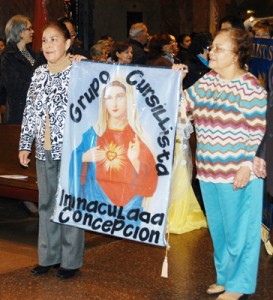
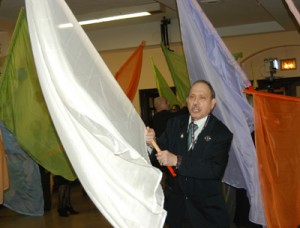
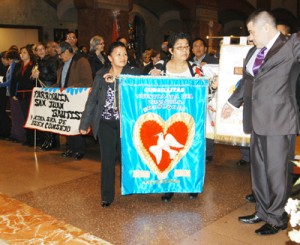
Cursilliastas sang “Quiero Decirte Que Si” (I Want to Say Yes) as they processed into Mass carrying banners representing many of the 55 diocesan parishes actively involved in the movement.
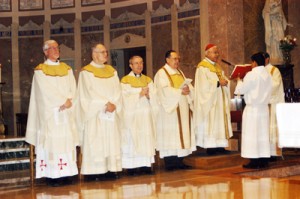
“Feliz Aniversario,” announced retired Auxiliary Bishop Guy Sansaricq, who was the main celebrant of the afternoon Mass.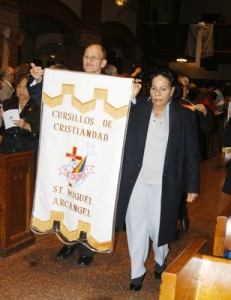
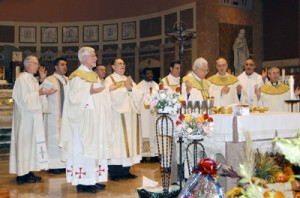
Deacons Jaime Varela, Jorge Gonzalez and Manuel Barahona, special assistant to Msgr. Vazquez, assisted on the altar.
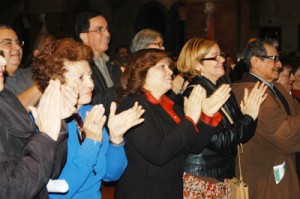
Among the standing-room-only crowd was Clara Rodriguez from St. Sylvester parish, East New York.
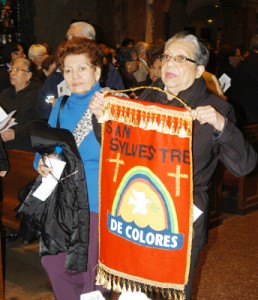
Now she is one of the movement’s leaders, responsible for introducing the Cursillo to local parishes with Spanish-speaking communities.
“We’ve been evangelizing in the diocese for 50 years,” she said, “because we want to bring the Christ we all met in Cursillo to others.”
Deacon Barahona, who lived Cursillo 506, proclaimed the Gospel from St. Matthew. In the passage, Jesus commissions His disciples to go and “make disciples of all nations.”
The first official Cursillo was held in 1949 and the movement spread to the U.S. in 1957. The Brooklyn Diocese held its first Cursillo Dec. 6-9, 1962, at the Monastery of Suffern in Upstate, N.Y.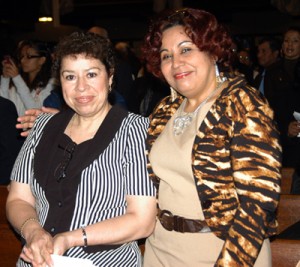
To date, the diocese has conducted 668 Spanish Cursillo retreats. 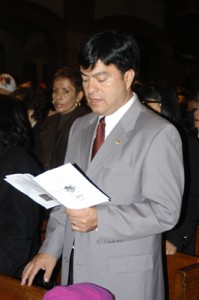
“I give myself completely because of the dedication of the lay people,” said Msgr. Vazquez. “It is impossible not to love it.”
Even after the retreat, Cursillistas meet for weekly and monthly group reunions as well as weekly formation sessions, which are held at St. Michael-St. Malachy parish, the home base for the movement since the Casa de Cursillos closed. 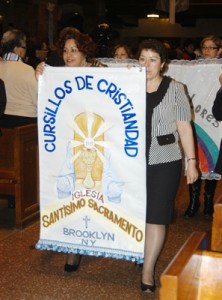
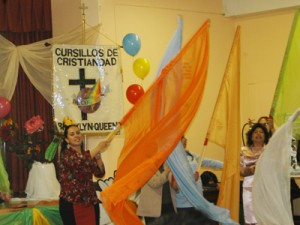
While the current decline in sacramental life and the ongoing economic crisis are challenges facing the movement, Msgr. Vazquez still believes the movement is essential to the new evangelization because it fosters a continual conversion and provides a strong support network for Catholics who strive to live and spread their faith.
“The Cursillo changed my life,” said Lajara, who says it changed the way he sees himself in relation to God and others. 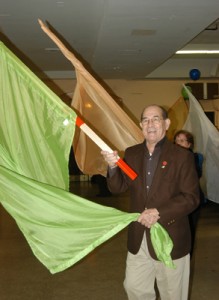
“I go to Mass every Sunday now,” he said, “and I enjoy it. I read my Bible more. I have the formation school every Monday, and we have group (meetings) on Mondays, Tuesdays and Wednesdays.”
In the movement, he says he’s learned the following: “God comes first and after that my neighbor. When I see my neighbor, we laugh, we hug, we cry together. And when I see my neighbor in need, I see God.”


