By Emily Drooby

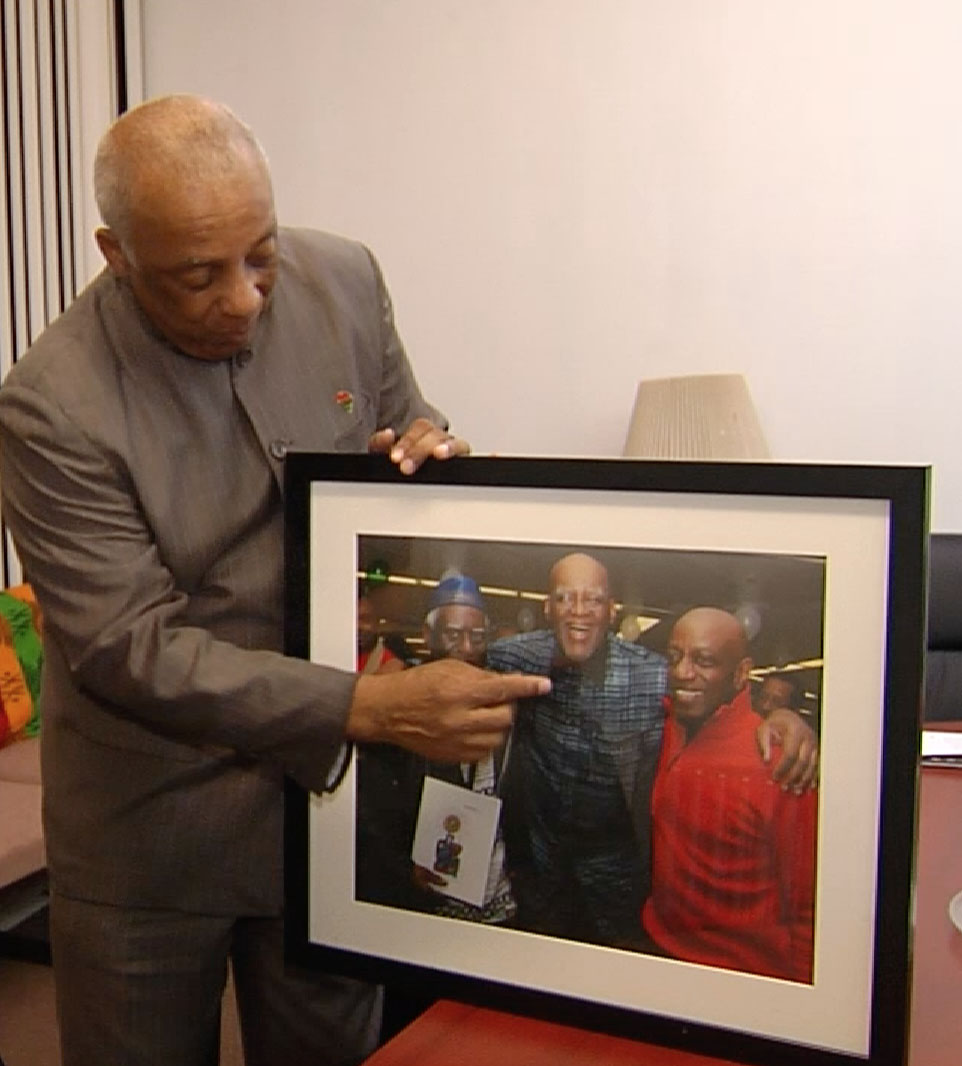
More than 100 members of St. Peter Claver Church, Bedford-Stuyvesant, are fighting for their church’s history.
“We want Claver Place to mean something,” explained Delores Casey, president of the Father Bernard John Quinn Guild.
The people in the pews of St. Peter Claver Church, Brooklyn’s first parish for black Catholics, were furious when they heard about a proposal that would co-name their church’s street, Claver Place, after a black activist.
Jitu Weusi, formerly named Les Campbell, was an educator and community leader who had a key role in the Ocean Hill/ Brownsville conflict that brought national changes to community control of public education. He also co-founded the East – a famous cultural institution on Claver Place, that focused on black nationalism.
Sharonnie Perry, a friend of Weusi, described him as an extraordinary person. “I think his legacy will live on in our community for many, many generations to come.”
The co-naming proposal was brought before the Bedford-Stuyvesant community board by Weusi’s son as a way to honor his father, who died in 2013.
So why are some firmly against this?
St. Peter Claver parishioners who knew Weusi personally claim he was anti-Catholic and racist.
Parishioner Meredith Chandler witnessed his behavior firsthand. “How he treated the parishioners, how he treated the community, how he treated the residents, it was full of bigotry, it was full of hatred,” she said.
In letters to the community board, both parishioners and local residents detailed what they called bad behavior, writing how he disrespected parish priests and the nuns who taught the children, calling them names like “white devils.” One person wrote: “Play time outside was interrupted by chants and harassment towards children because we were considered light skin.”
In testimonies, parishioners detail incidents where Weusi and his followers disrupted church services with a megaphone, stopped brides from getting to their wedding, screamed and cursed at children, parishioners and nuns. They described him as violent, extreme and constantly at odds with the church.
Unacceptable Choice
“To have Claver Place co-named after someone who was anti-Catholic and very much caused a lot of heartache to the Catholic community is really, was just unacceptable, to the parishioners at St. Peter Claver,” said Father Alonzo Cox, the pastor of St. Peter Claver Church, a worship site of St. Martin of Tours parish.
Parishioners gave their letters to the community board and spoke out at a board meeting last June, but the resolution still passed unanimously.
“We weren’t really heard,” said Chandler. “No one cared to hear what we had to say. In their minds, it was a done deal and forget about the history of the church, that didn’t matter.”
The co-naming request is being reviewed by the City Council and parishioners said they would back off if it was moved to any other street. They are requesting the street be co-named for Father Quinn, the church’s founding pastor, and a candidate for sainthood.
Weusi’s supporters, like Assemblyman Charles Barron, said that since Claver Place is the home of the East, along with a school and a festival started by Weusi, it has to be there.
“That’s where it all started and that’s why we have to preserve it so that if anyone walks by there, they will be able to say this is where the East started, this is where the international Arts Festival started, this is the birth place of a cultural revolution led by Jitu Weusi,” Barron said.